

Best 10 Masterpiece AI Image Prompts for Hyper Detailed Premium Artwork of Ancient Architectural Wonders
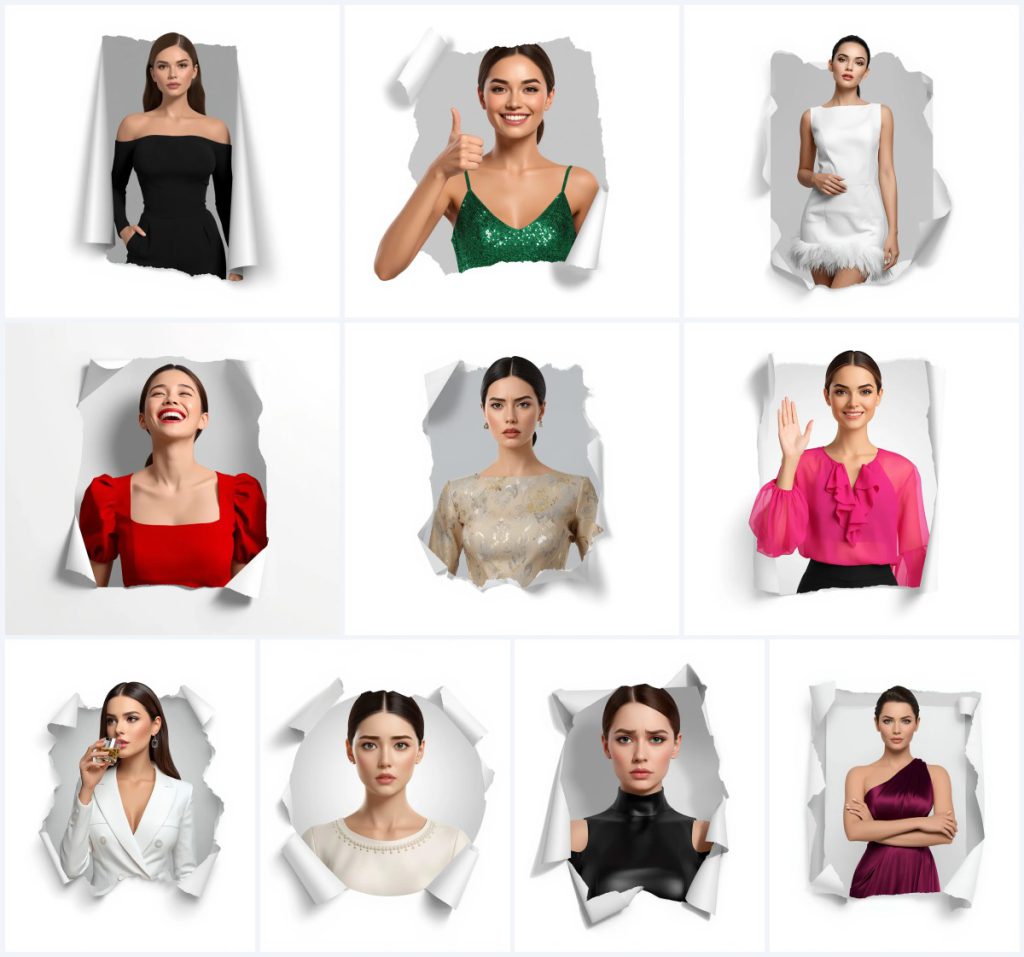
This collection brings together ten distinct character-driven prompts that share a single, striking visual framework. Each one describes a beautiful woman rendered as an ultra-clean, high-resolution 3D avatar, and every image relies on the same clever torn-paper illusion to make the subject feel as though she is bursting out of the frame.
What changes from prompt to prompt is the mood, the outfit, and the gesture—ranging from a sleek black off-shoulder jumpsuit and a cool stare to a deep plum gown paired with a calm, crossed-arm pose. The result is a versatile set that can populate a fashion lookbook, an editorial spread, or a social-media carousel while keeping a cohesive, premium aesthetic.
What this torn-paper avatar collection is asking for
Every prompt in this set builds the same core scene: a chest-up 3D render of a woman whose face stays identical across variations, seen through a ripped paper opening. The paper hole contains a subtle light grey gradient, while the outer background stays a locked pure white. Soft studio lighting keeps shadows gentle and highlights smooth, and the whole composition sits inside a 4:5 vertical aspect ratio.
- A beautiful woman with consistent facial identity across all frames
- A torn paper hole with realistic ripped edges wrapping around her half-body
- A subtle light grey gradient visible inside the paper opening
- A pure white background locked without any gradient or color shift
- Soft studio lighting with no harsh shadows
- A 4:5 vertical aspect ratio framing only the chest-up view
The shared scene that holds these ten prompts together
Despite the different outfits and expressions, the environment stays remarkably consistent. Every image is described with “an ultra-clean, high-resolution, sharp, polished 3D render,” and the woman is always “clearly maintaining identical facial identity and features across all frames.” The torn paper device is the anchor: “realistic, ripped edges wrapping naturally around her half-body” create the illusion that she is pushing through the surface, while “a subtle light grey gradient inside the paper hole” adds depth without distracting from the subject.
The lighting and background are deliberately minimal. “Soft studio lighting, even and clean, casting no harsh shadows” keeps the focus on the avatar’s expression and attire, and the “single cool, crisp pure white, locked without gradient or color shift” outside the tear ensures the composition feels airy and modern. This uniformity means the ten cards read as a deliberate series rather than ten unrelated portraits.
Why this collection works for premium, hyper-detailed artwork
These prompts are engineered to produce images that feel both editorial and technically polished. The combination of a locked facial identity, a 3D pop-out effect, and a restrained studio setup gives each output a high-end commercial look while keeping the generation process predictable and repeatable.
- The torn paper illusion adds a tactile, three-dimensional quality that makes the avatar feel alive and physically present.
- Keeping the facial identity identical across all ten prompts creates a recognizable character, perfect for brand mascots or consistent visual storytelling.
- The pure white background and soft studio lighting remove visual noise, making the hyper-detailed clothing textures and expressions the undisputed focal point.
Three styles you can explore without leaving this prompt structure
This collection already demonstrates a range of moods and materials, but there are three distinct visual styles you can emphasize by tweaking the descriptive language within the same torn-paper framework. Each style keeps the core avatar, ripped paper, and studio lighting intact while shifting the fashion and emotional tone.
- Editorial minimalism: Lean into monochrome outfits like the sleek black jumpsuit or the white tuxedo dress, and pair them with neutral expressions—cool stares or calm crossed arms—for a high-fashion magazine feel.
- Playful glamour: Use the sparkling green cocktail dress, hot pink chiffon blouse, or bright red structured mini dress, and combine them with cheerful gestures such as a thumbs-up, a wave, or a laughing expression to create energetic, party-ready portraits.
- Textured luxury: Focus on fabric-rich pieces like the beige and gold brocade top, the pearl-embellished mini dress, or the black leather-look dress, and choose serious or confused expressions to highlight the intricate material details under soft studio light.
How to generate these avatar portraits step by step
Because every prompt in this collection follows the same structural template, generating a cohesive set is straightforward. Start by selecting one card title—for example, the woman in the sleek black off-shoulder jumpsuit—and copy its full prompt text. If you have a specific face in mind, upload a clear reference photo to guide the AI. Run the generation, then carefully inspect the hands, facial symmetry, and the torn paper edges before moving on to the next outfit variation.
- Choose your starting card. Pick one prompt from the collection, such as the cheerful woman in the sparkling green cocktail dress, and copy the complete text.
- Upload a face reference. If your tool supports image uploads, provide a front-facing portrait with even lighting to help the AI lock the facial identity across all frames.
- Generate the base image. Paste the prompt into ChatGPT, Gemini, Leonardo AI, or Midjourney and create the first 4:5 vertical render.
- Check the hands and gesture. Zoom in on the thumbs-up, wave, crossed arms, or drink-holding hand to ensure fingers look natural and the torn paper does not clip through them.
- Verify the face and torn paper edges. Confirm the facial features match your reference and that the ripped paper hole wraps realistically around the half-body with a visible grey gradient inside.
- Repeat for the remaining outfits. Move through the other nine prompts, keeping the same face reference and settings so the series stays visually consistent.
What your reference photo needs for this torn-paper look
A strong reference photo is the secret to making the avatar’s face stay identical across all ten prompts. The AI uses the uploaded image to anchor the facial structure, expression baseline, and skin texture, so the reference should be as clean and neutral as the final scene you are building.
- Use a front-facing portrait shot against a plain, light background that mimics the pure white backdrop described in the prompts.
- Keep the lighting soft and diffused—avoid direct flash or strong side shadows that would conflict with the prompt's even studio lighting.
- Choose a photo where the person is visible from the chest up, matching the 4:5 vertical framing and the half-body crop of the torn-paper composition.
Tools that handle this avatar collection well
Different AI image generators interpret the polished 3D render style and torn-paper effect with varying levels of realism. The table below compares four popular tools, highlighting how each one can serve this specific collection based on its typical output quality and workflow features.
| Tool | Access | Typical realism | Useful here for |
|---|---|---|---|
| ChatGPT | Built-in DALL·E integration | High, with strong prompt adherence | Rendering the realistic ripped edges wrapping naturally around the half-body |
| Google Gemini | Web and mobile app | Moderate to high, improving rapidly | Maintaining the locked pure white background without gradient shifts |
| Leonardo AI | Freemium web platform | Very high with fine-tuned models | Capturing the soft studio lighting and smooth highlights on the deep plum gown |
| Midjourney | Discord-based subscription | Exceptional, often photorealistic | Preserving identical facial identity across all ten outfit variations |
Three tips to get the most out of this collection
Small adjustments in how you prompt and post-process can elevate these torn-paper avatars from good to gallery-ready. The tips below focus on the real materials and objects named inside the prompts, such as the white feather trim, the delicate glass, and the pearl embellishments.
- When generating the white feather-trimmed mini dress, add a short negative prompt for over-smoothed fur so the feather texture stays crisp and individual barbs remain visible under the soft studio lighting.
- For the sophisticated woman holding a delicate glass, describe the liquid inside with a specific color—like a pale golden drink—to give the transparent object more depth against the pure white background.
- With the pearl-embellished mini dress, increase the output resolution or use an upscaler so each pearl catches a tiny, clean highlight, reinforcing the polished 3D render quality mentioned in the prompt.
Common issues and quick fixes for this torn-paper series
Even with a well-written prompt, certain visual failures can creep into the results. The table below lists four problems that frequently appear when generating this specific torn-paper avatar style and explains exactly what to change in your settings or wording.
| Issue | What to change |
|---|---|
| The torn paper hole looks like a smooth digital cutout instead of ripped paper | Reinforce the texture by adding 'fibrous, irregular torn edges with paper pulp visible' to the prompt |
| The facial identity shifts noticeably between outfit prompts | Use the same seed number and face reference image for every generation across all ten cards |
| The pure white background picks up a faint cream or blue tint | Add 'hex #FFFFFF background, zero color cast' and reduce the AI tool's default warmth or vibrancy settings |
| The hands in poses like thumbs-up or holding a glass appear fused or misshapen | Switch to a model version with better hand anatomy, or crop the frame slightly higher to reduce the hand area the AI must resolve |
Frequently Asked Questions
Can I mix outfits and expressions from different cards in this collection?
Yes, the prompts are modular by design. You can take the pose from the calm woman with arms crossed and apply it to the deep plum gown, or combine the cheerful thumbs-up gesture with the white feather-trimmed mini dress. Just keep the torn-paper structure, studio lighting, and pure white background language intact so the series remains visually unified.
How do I make sure the grey gradient inside the paper hole stays subtle?
The prompt already specifies 'a subtle light grey gradient inside the paper hole.' If your outputs show a gradient that is too dark or harsh, add a clarifying phrase like 'barely perceptible soft grey fade, almost white at the center.' You can also lower the contrast setting in your AI tool to keep the interior gradient gentle.
Will these prompts work if I want full-body shots instead of chest-up framing?
The prompts are written specifically for a chest-up crop within a 4:5 vertical aspect ratio, and the torn paper effect is described as wrapping around her half-body. If you request a full-body view, you will need to rewrite the framing and torn-paper placement accordingly, but the lighting, background, and 3D render style can stay the same.
Conclusion
This collection of ten hyper-detailed avatar prompts proves that a single, well-built visual concept can carry an entire series. By locking the torn-paper illusion, the studio lighting, and the pure white backdrop, you free yourself to play with fashion, color, and emotion while keeping every image unmistakably part of the same premium set. Whether you generate one card or all ten, the result is a polished 3D portrait that feels modern, tactile, and ready for any high-end visual project.
Remember to edit only a photo you own or have explicit permission to modify, and enjoy refining your torn-paper avatar series.