

New 10 Flux AI Prompts for Men’s Abstract and Evolving Digital Art Forms
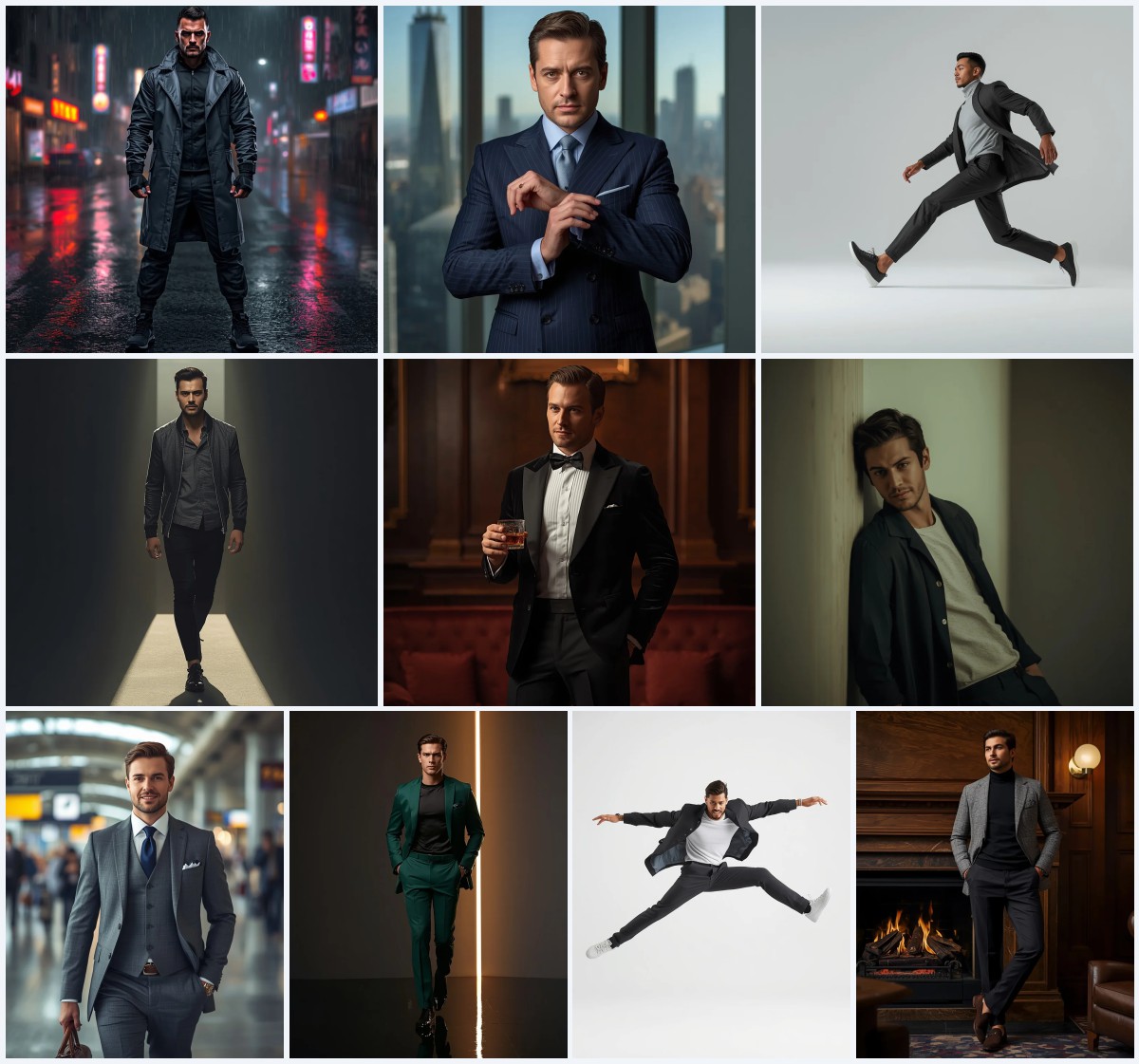
This collection of ten Flux AI prompts is built for men's fashion and portrait images that feel both editorial and slightly futuristic. The set moves from classic velvet blazers and tailored suits to a quantum light ribbon collage, giving you a range of looks that share one goal: sharp, cinematic male portraiture with rich fabric textures and controlled lighting.
Each card is a standalone prompt, but together they form a small wardrobe of moods. You can generate a calm, confident man in a charcoal wool coat outside a restaurant, or a stylish figure sliding along a concrete wall in a beige suede jacket. The prompts are detailed enough to guide a model toward realism, yet open enough to let you adjust pose, setting, and expression.
What this men's abstract and evolving digital art prompt set is asking for
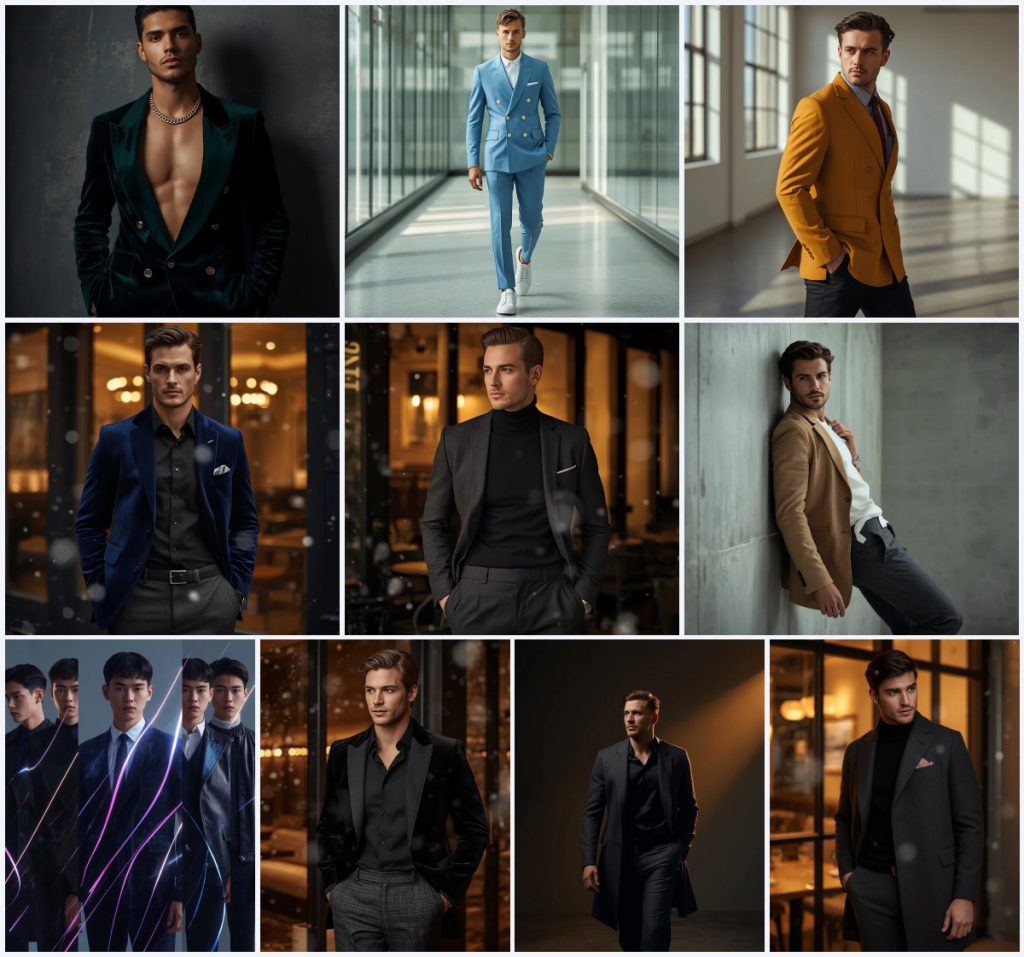
The collection asks for a series of photorealistic male portraits and full-body shots where clothing, lighting, and setting carry the story. Several prompts repeat a night scene outside a luxury modern restaurant with falling snow and warm golden light, while others place the man in bright architectural spaces, a clean loft, or a dark concrete studio. The most experimental card introduces glowing quantum light ribbons that slice through dimensions around the figure, revealing different outfits in each slice.
- A deep emerald green velvet double-breasted suit worn without a shirt, with a statement gold neck chain against a textured dark grey wall.
- A powder blue double-breasted suit paired with white sneakers, walking through a modern architectural space with glass walls.
- A retro mustard-yellow double-breasted blazer with black tailored trousers, set in a clean modern loft with large windows and soft afternoon daylight.
- A midnight blue velvet blazer over a black button-down shirt, standing outside a luxury modern restaurant at night with soft snow and warm golden light.
- A charcoal grey wool blazer or coat over a black turtleneck, in the same snowy restaurant scene with soft bokeh from falling snow.
- A quantum light ribbon collage where neon blue and purple ribbons reveal a black trench coat, a velvet suit, a leather jacket, and a knit sweater.
The shared scene and how the prompts describe it
Most cards share a polished, cinematic environment. The repeated night setting is described as "standing outside a luxury modern restaurant at night, with warm golden light spilling from the windows and soft snow falling around him." That same clause appears across the velvet blazer, wool blazer, and wool coat prompts, creating a consistent mood of quiet luxury and winter calm.
The studio and architectural prompts shift the atmosphere. One card places the man in a "clean modern loft with large windows letting in soft afternoon daylight, casting long elegant shadows," while another uses a "dark, minimalist concrete studio" with a "heavy beam of warm golden light cutting across" the space. The collage card breaks from realism with "glowing quantum light ribbons" that "slice through dimensions" and blend "neon blue and purple hues."
Why this collection works for men's fashion and digital art
This set is useful because it combines wearable fashion with a few experimental prompts, so you can test both realism and abstraction in one session. The repeated restaurant scene gives you a reliable baseline for lighting and fabric, while the quantum ribbon collage pushes the model toward digital art without losing the human subject.
- The prompts specify fabric textures like velvet, wool, and suede, which helps the model render material detail instead of generic clothing.
- The lighting instructions, such as cinematic low-key lighting, bright and airy light, and high-contrast spotlights, give you control over mood without rewriting the prompt.
- The collage card adds a clear digital art concept with quantum light ribbons, so you can generate an evolving, abstract look alongside the photorealistic portraits.
Three styles inside this prompt set
Three styles dominate the collection, and each one stays within the wording of the prompts. You can move between them by choosing a different card rather than changing the core description.
- High-fashion editorial: The powder blue suit and emerald velvet suit cards use terms like high-fashion editorial, 85mm lens, and photorealistic to create a magazine-ready look.
- Cinematic night portrait: The midnight blue velvet, charcoal wool blazer, and charcoal wool coat prompts share warm golden light, falling snow, and soft bokeh for a moody winter portrait.
- Futuristic digital collage: The quantum light ribbon card uses glowing ribbons, neon blue and purple hues, and volumetric glow to build an abstract, evolving fashion collage.
How to use these prompts step by step
Start with one card rather than all ten at once. Copy the prompt text exactly, then decide whether you want a pure text-to-image generation or a reference-based one. If you upload a reference photo, keep it simple and well lit so the model can read the face and posture without fighting the original background.
- Copy the prompt. Paste the full prompt from the card into your AI image tool, keeping the clothing, lighting, and lens details intact.
- Upload a reference. If you want a specific face or body type, upload a clear reference photo and set the influence low enough that the prompt's outfit and scene still dominate.
- Generate a first batch. Run four to six images at once so you can compare how the model handles velvet, wool, or the quantum ribbons across variations.
- Check hands. Look for extra fingers, merged knuckles, or hands hidden in pockets, especially in the walking and sliding poses.
- Check face. Make sure the expression matches the prompt, whether it is intense and confident, cool and collected, or calm and looking slightly off-camera.
- Check the main object. Inspect the main clothing item or the quantum light ribbons for missing details, such as the gold neck chain, the double-breasted buttons, or the neon glow.
What to look for in a reference photo
A good reference photo helps the model keep the face and proportions consistent while the prompt supplies the outfit and scene. You do not need a professional shoot, but you do need clarity.
- Use a front-facing or slightly angled portrait with even lighting so the model can read your facial features without heavy shadows.
- Avoid busy backgrounds, because the prompts already define a specific setting like a restaurant exterior, a concrete studio, or a modern loft.
- Choose a photo where your hands are visible and relaxed if you plan to use the walking or sliding prompts, since those poses depend on natural hand placement.
Which AI image tools handle these prompts best
Different tools interpret fabric and lighting differently, so it helps to know what each one tends to do well. The table below compares four common options for this collection.
| Tool | Access | Typical realism | Useful here for |
|---|---|---|---|
| ChatGPT | Web and mobile app | Moderate to high, with strong prompt understanding | Drafting variations of the emerald velvet suit and gold neck chain scene before you commit to a final render. |
| Google Gemini | Web and mobile app | Moderate, improving with detailed prompts | Testing the powder blue suit in a modern architectural space with glass walls and bright, airy lighting. |
| Leonardo AI | Web app with free tier | High for cinematic portraits | Rendering the midnight blue velvet blazer outside a luxury restaurant with falling snow and soft bokeh. |
| Midjourney | Discord and web app | Very high for editorial fashion | Capturing the quantum light ribbon collage with neon blue and purple hues and ultra-realistic skin textures. |
Tips for better results with this prompt set
Small adjustments can make a big difference when you are working with detailed fashion prompts. These three tips focus on real materials and objects named in the cards.
- For velvet prompts, add words like rich velvet textures and deep emerald green or midnight blue to keep the fabric from looking flat or plastic.
- For the snow scenes, mention warm golden light and soft bokeh so the falling snow catches the light instead of appearing as white noise.
- For the quantum light ribbon collage, keep the neon blue and purple hues and the semi-transparent glow, and avoid adding extra light sources that compete with the ribbons.
Common issues and how to fix them
Even strong prompts can fail in predictable ways. The table below lists four issues this collection can actually produce and what to change.
| Issue | What to change |
|---|---|
| The velvet suit looks shiny like satin instead of soft velvet | Add rich velvet fabric texture and reduce any mention of gloss or shine in the prompt. |
| The falling snow looks like static noise | Specify soft bokeh and warm golden light so the snow catches the restaurant light instead of appearing as random dots. |
| The quantum light ribbons cover the face | Add a clause like ribbons framing the figure without obscuring the face, and keep the neon blue and purple hues. |
| The hands look distorted in the walking or sliding poses | Simplify the hand position, such as one hand casually in his pocket, and regenerate with a lower reference influence. |
Frequently Asked Questions
Can I use these prompts without uploading a reference photo?
Yes. Every card works as a pure text-to-image prompt. The clothing, lighting, and lens details are specific enough to generate a complete portrait without a reference, though a reference helps if you want a consistent face across multiple images.
Which prompt in this collection is best for a digital art look rather than a photo?
The Quantum Light Ribbon Futuristic Male Fashion Collage is the most abstract card. It uses glowing quantum light ribbons, neon blue and purple hues, and volumetric glow, which push the result toward digital art while still keeping a stylish modern man as the subject.
Why do several prompts repeat the same restaurant night scene?
The repeated scene with warm golden light, falling snow, and soft bokeh creates a consistent cinematic mood across the velvet blazer, wool blazer, and wool coat cards. It lets you compare how different fabrics like velvet and wool behave under the same lighting.
Conclusion
This collection gives you ten distinct ways to generate men's fashion portraits and one experimental digital collage, all with clear instructions for fabric, lighting, and pose. Start with the card that matches your mood, whether that is a calm snowy restaurant scene or a neon quantum ribbon collage, and adjust only one detail at a time. The prompts are detailed enough to guide the model, but flexible enough that you can make each image your own.
Only edit and upload a photo if you have the right to edit it and share the result.