

Top 10 Whimsical Girl’s AI Prompts for Bubble Tea Delights
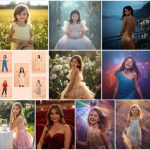
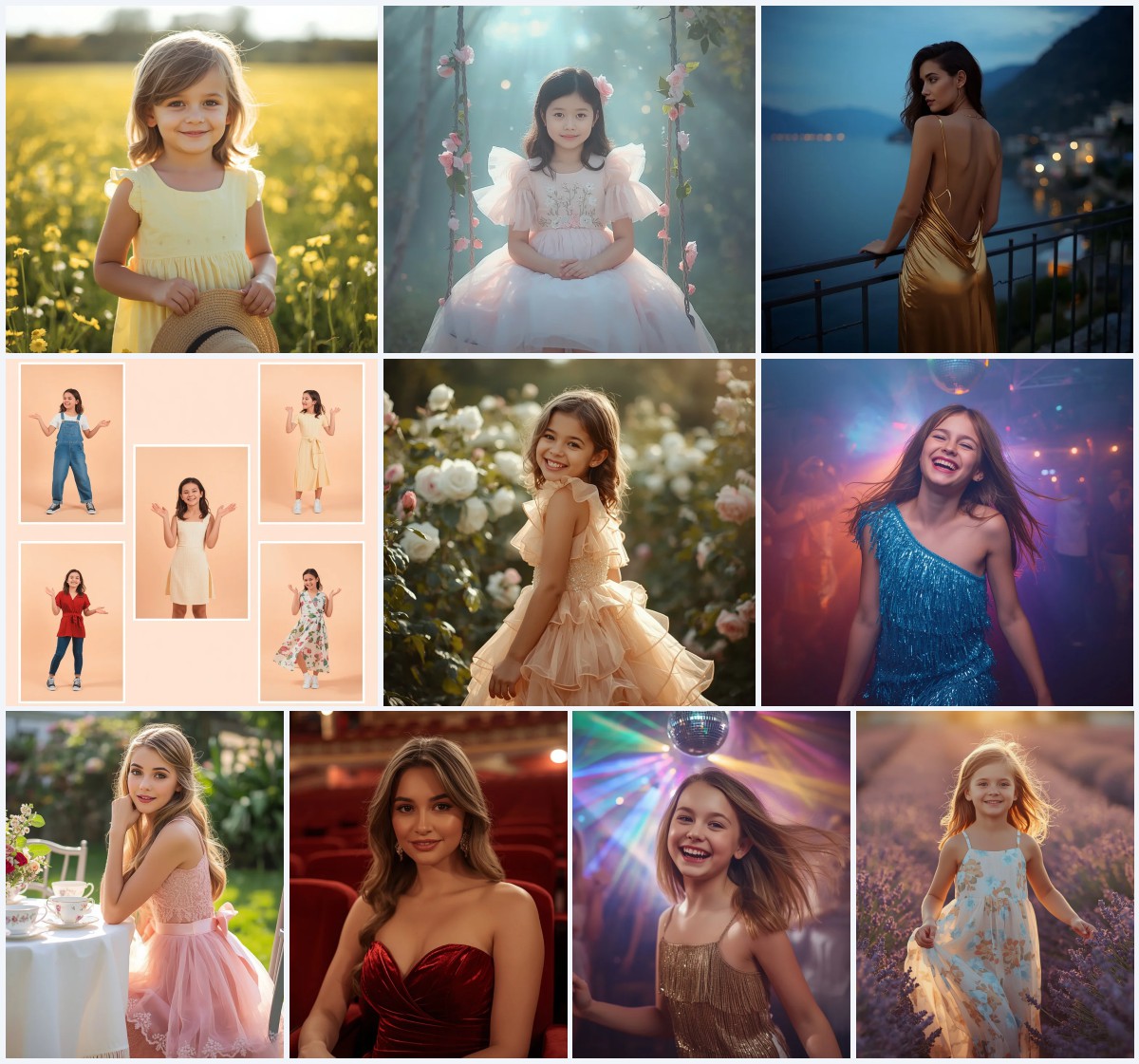
This collection gathers ten whimsical girl's AI prompts built around sweet, playful scenes and bright, wholesome moods. The shared thread is a cheerful young girl in carefully described clothing, captured in candid moments that feel like stills from a family album rather than stiff studio poses. Each prompt names a specific outfit, a specific place, and a specific light, which is what makes the set usable rather than vague.
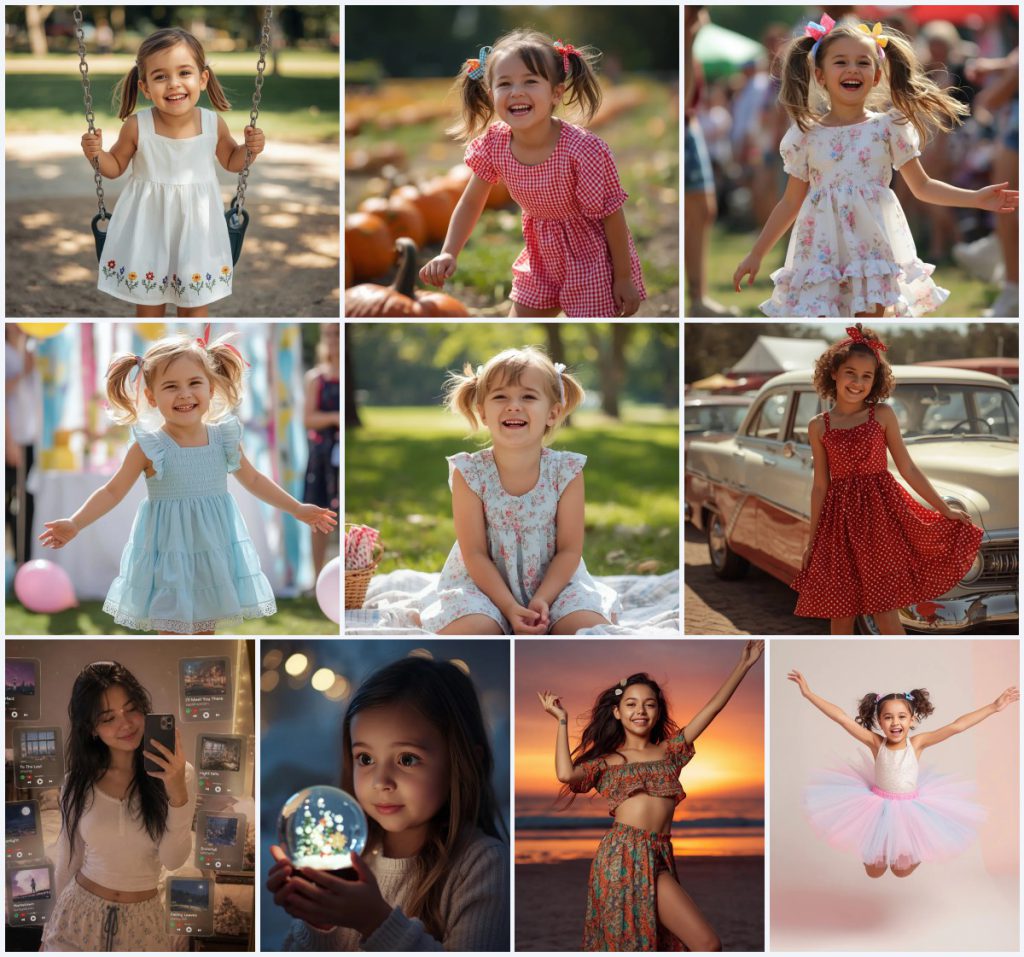
The titles range from a sweet A-line sundress for a summer day at the park to a joyful girl in a pastel tutu skirt and top for a playful scene, plus a cozy bedroom mirror selfie with a lo-fi playlist and a cute girl's innocent gaze at a magical snow globe. Because the set mixes outdoor daylight scenes with indoor glow and studio setups, the same model can behave very differently from card to card. This article walks through what the prompts ask for, how to run them, and where they usually break.
What this whimsical girl's prompt set is asking for
Across the collection, the prompts describe a young girl in a happy, candid moment, dressed in a clearly specified outfit, lit by natural or studio light, and framed with a shallow depth of field. The wording is consistent enough that you can swap the scene while keeping the mood, which is useful when you want a matching set of images rather than one lucky result.
- Knee-length dresses and jumpsuits with named details such as embroidered flowers, gingham, lace trim, smocking, ruffles, or polka dots
- Pigtails or bouncy curls tied with colorful ribbons or a bandana
- A wide, happy smile and a candid, laughing expression rather than a posed stare
- Bright natural daylight with a warm, inviting atmosphere
- Lens and depth cues such as 50mm, 35mm, soft focus background, and shallow depth of field
- Occasional indoor or studio variants, including fairy lights, a pastel backdrop, or a glowing snow globe
The shared scene and how each card shifts it
Most cards place the girl outdoors in warm daylight. One prompt reads "A joyful girl pushing a swing in a sunny park, laughing brightly," while another sets her "exploring a pumpkin patch on a sunny autumn day." A third puts her "dancing in a lively outdoor summer festival," and a fourth has her "playing with balloons at a brightly decorated outdoor birthday party." The picnic card sits her "on a picnic blanket in a sun-dappled park," and the vintage card has her "posing next to a classic vintage car at an outdoor car show."
The remaining cards move indoors or into a studio. The mirror selfie card asks for "a cozy bedroom setting with a warm, blurred background (soft bedding, fairy lights, books)," the snow globe card describes "a soft blur of a cozy, dimly lit bedroom, perhaps with fairy lights," and the tutu card uses "a clean, minimalist studio with a soft pastel backdrop." The beach party card splits the difference with "a stunning ocean sunset" and "soft, diffused golden hour light."
Why these prompts work for bubble tea style delights
The set leans on sweetness without becoming saccharine, because every card anchors the mood in a concrete object or action. That combination of a specific outfit and a specific activity gives the model enough to build a believable frame, and it gives you a clear checklist when you review the output.
- The clothing is described in enough detail that the model has to commit to a fabric, a cut, and a color instead of defaulting to generic children's wear
- The lighting is named in almost every card, so you get a consistent warm, inviting feel across the whole set
- The candid framing and shallow depth of field push the result toward a real photograph rather than a flat illustration
Three styles that stay inside this set
Three styles fit this collection without fighting it: bright natural daylight photography, soft studio pastel portraiture, and warm indoor glow. Each one already appears somewhere in the ten cards, so you are extending the set rather than inventing a new one.
- Bright natural daylight: Keep the warm, inviting daylight and the shallow depth of field, and let the outfit colors carry the frame in park, picnic, or festival scenes.
- Soft studio pastel: Use the clean, minimalist studio with a soft pastel backdrop and diffused lighting, which suits the tulle skirt and the party dress especially well.
- Warm indoor glow: Lean into the cozy bedroom with fairy lights and a blurred background, as the mirror selfie and snow globe cards already do.
How to run these prompts step by step
Work through one card at a time rather than pasting the whole set at once, because each prompt has its own outfit and light. The sequence below keeps the identity, the pose, and the details under control.
- Copy the prompt. Open the card you want and copy the full text, including the lens and lighting clauses, since those do most of the realism work.
- Upload a reference. Attach a clear, well-lit photo of the person if the tool supports identity reference, and say that face structure and expression should match.
- Generate the first pass. Run one image before changing anything, so you can see which parts of the prompt the model ignored.
- Check the hands. Look at fingers, grip, and anything the subject is holding, such as balloons, a snow globe, or a phone in the mirror selfie.
- Check the face. Confirm the expression reads as a genuine, candid smile and that the eyes and teeth look natural rather than painted.
- Check the main object. Verify the outfit details, the ribbons, and the background element, then re-run with one small correction at a time.
Choosing the reference photo
The reference photo decides how much of the prompt survives. A clean, evenly lit shot gives the model a stable face to work from, while a blurry or heavily filtered one forces it to guess.
- Use a front-facing photo with even lighting and no strong shadows across the face
- Avoid sunglasses, hats, or hair covering the eyes, since the prompts depend on a visible, happy expression
- Match the reference framing to the card, roughly full body for the park and festival scenes, closer for the snow globe and mirror selfie
Which tools handle this set best
Different tools are good at different parts of this collection. Some are stronger at identity, others at clothing texture, and others at the soft, glowing indoor cards.
| Tool | Access | Typical realism | Useful here for |
|---|---|---|---|
| ChatGPT | Free and paid tiers | Good with clear instructions | Rewriting a card so the embroidered flowers on the hem or the gingham jumpsuit stay consistent across several images |
| Google Gemini | Free and paid tiers | Strong on natural light | The bright, natural daylight park and picnic cards where the warm, inviting atmosphere matters most |
| Leonardo AI | Free credits, paid plans | Strong on texture and fabric | The tulle skirt and ruffle dress cards, where layered fabric has to read as real cloth |
| Midjourney | Paid subscription | High on photographic finish | The beach party card with the printed maxi skirt and the golden hour ocean sunset |
Tips that use the real objects in these prompts
Small wording changes have a large effect on this set. Keep the named objects in the prompt and adjust only the surrounding language.
- Keep the ribbons in the pigtails, because they are a repeated anchor across most cards and help the images feel like one series
- Name the fabric when it matters, such as tulle for the pastel skirt or gingham for the jumpsuit, since vague cloth descriptions blur together
- For the snow globe card, describe the glow as coming from the object itself, so the light stays on the face instead of flooding the whole room
Common problems and what to change
Most failures in this set come from the model compressing the outfit, the light, or the action into something generic. The fixes below are small edits, not full rewrites.
| Issue | What to change |
|---|---|
| The dress loses its named detail and becomes plain | Repeat the specific clause, such as the embroidered flowers on the hem or the lace trim, and ask for it in the same sentence as the outfit |
| The smile looks stiff or painted | Add the candid, laughing wording and ask for a natural expression, then reduce any beauty or smoothing language |
| Hands or held objects look wrong | Name the object again, such as the balloons or the snow globe, and describe the grip in plain words |
| The background overpowers the subject | Reinforce the shallow depth of field and the soft focus background so the girl stays the clear subject |
Frequently Asked Questions
Can I use one reference photo for all ten cards?
Yes, and it is often better, because the face stays consistent across the series. Just make sure the reference is front-facing and evenly lit, since the outdoor cards and the indoor snow globe card need the same clear view of the face.
Why do the outfit details keep disappearing?
Long prompts get compressed, and clothing is usually the first thing to go. Restate the specific detail, such as the gingham jumpsuit or the polka dot midi dress, in the same sentence as the subject so it stays attached to her.
Which card is hardest to get right?
The mirror selfie card, because it combines a mirror reflection, a phone in hand, and a set of floating glass music player cards. Run it on its own and check the reflection and the hands before adjusting anything else.
Conclusion
This collection works best when you treat it as one series rather than ten unrelated images. Keep the ribbons, the warm daylight, and the candid framing consistent, then let each card change only the outfit and the setting. Run the indoor cards separately from the outdoor ones, check the hands, the face, and the main object every time, and you will get a set that looks like it was shot in a single afternoon.
Edit only photos you have the right to edit, and keep a copy of the original before you start.