

New 10 AI Prompts for Women and Boys with Beautiful Bonding Moments
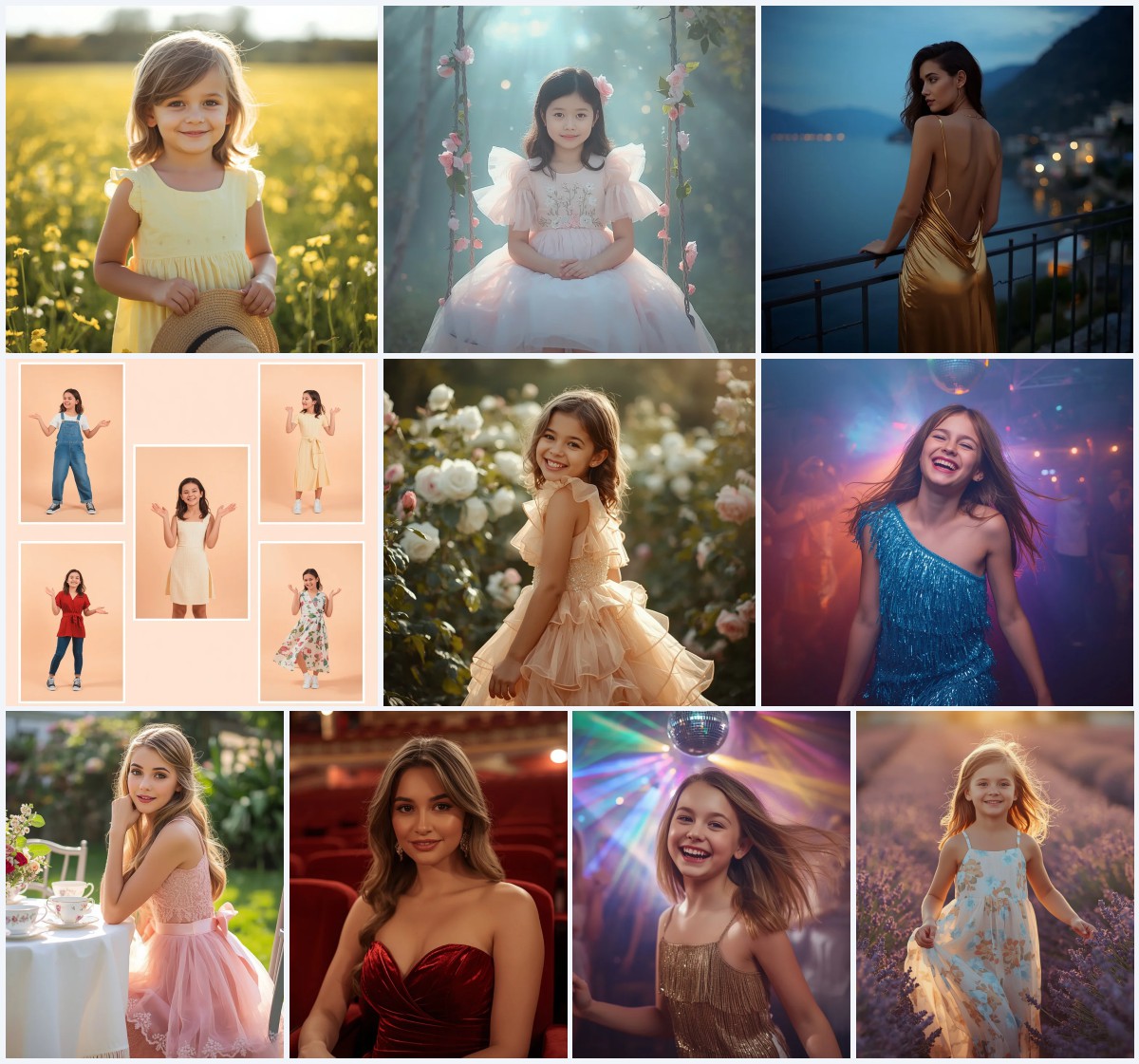
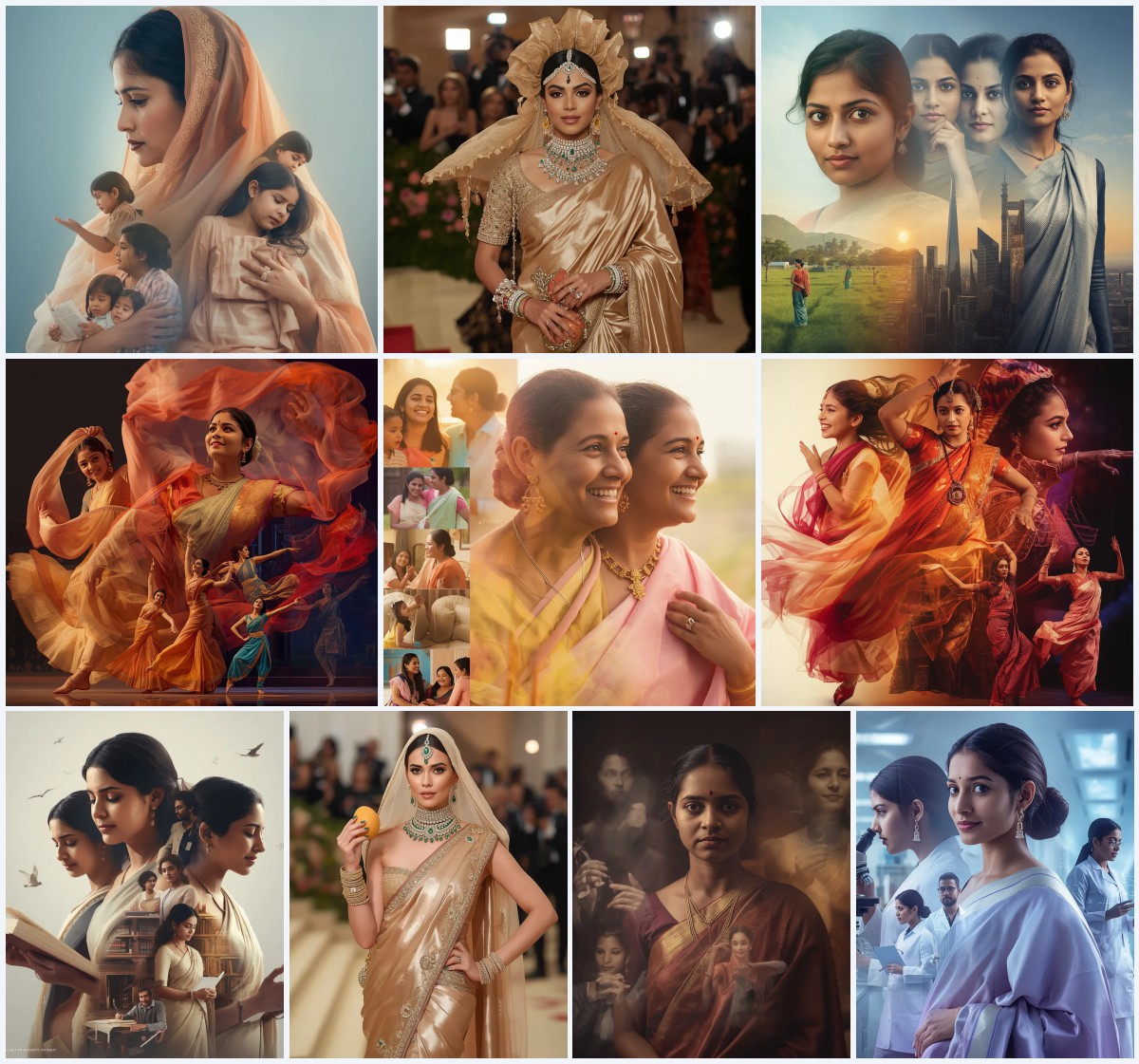
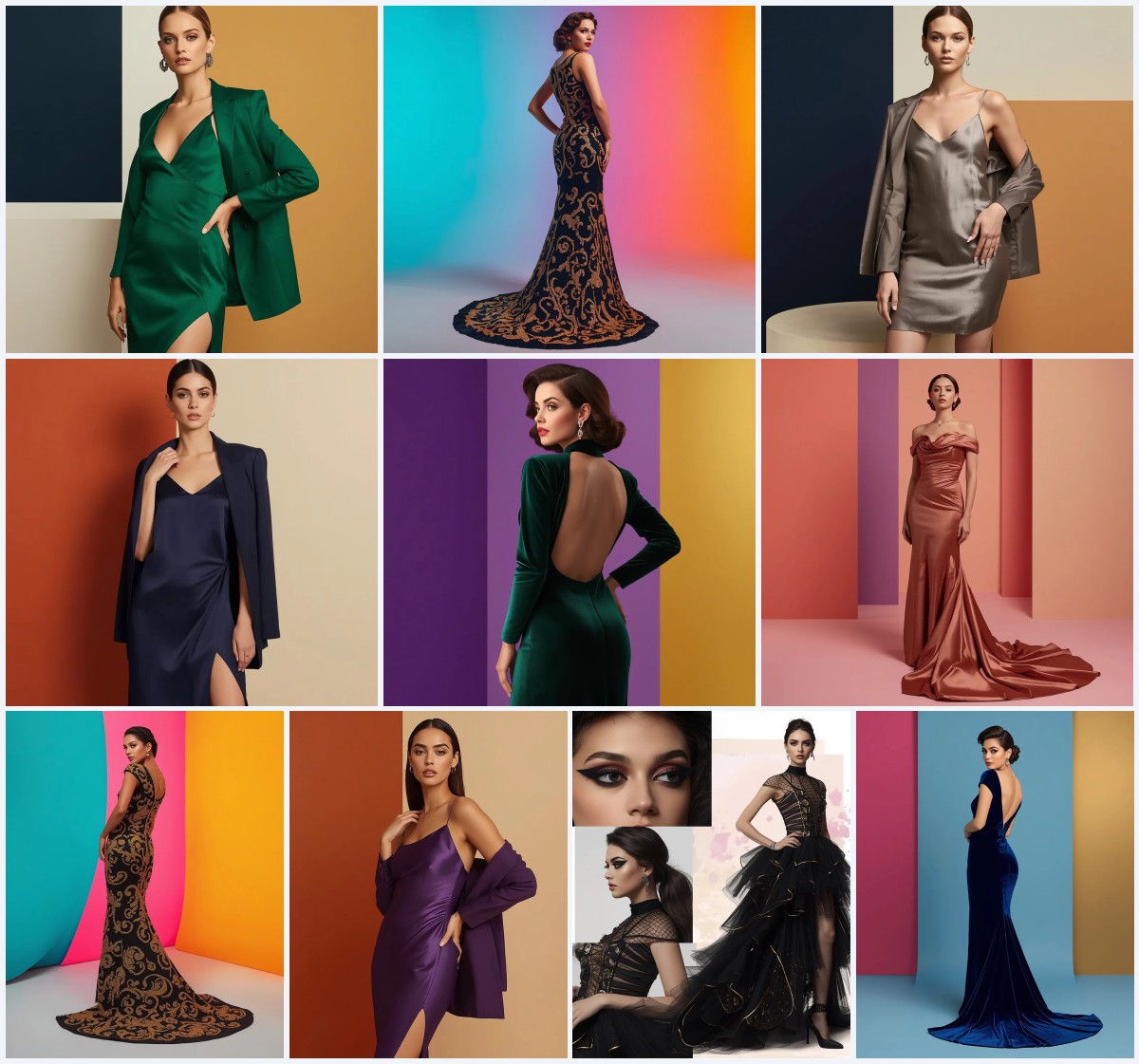
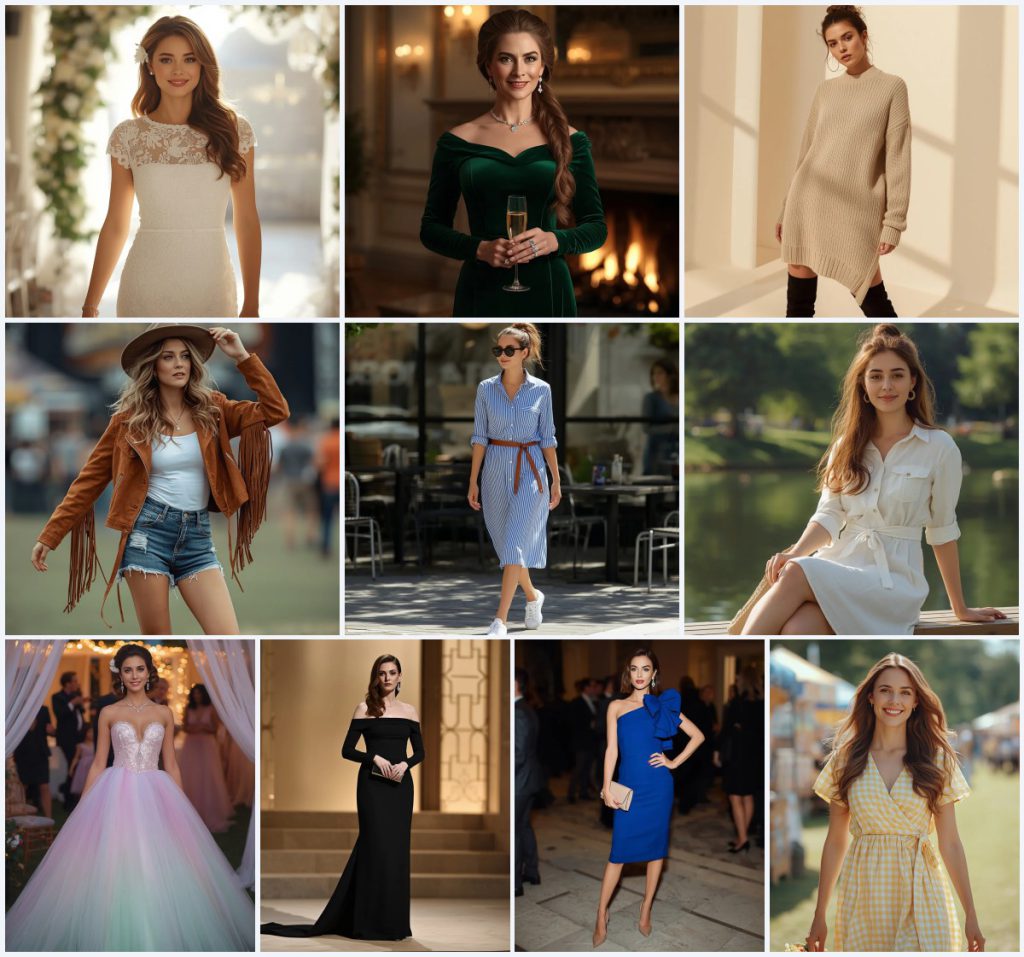
This collection gathers ten AI image prompts built around women's fashion moments, each one a distinct scene with its own outfit, setting, and lighting. The set covers a bridal shower in a white lace bodycon dress, a winter ball in an emerald velvet gown, a high-fashion sweater dress editorial, a festival look with a fringe jacket, a striped shirt dress at a cafe, a white linen shirt dress by a lake, a pastel ombre tulle gown, a black column gown at an awards ceremony, a royal blue cocktail dress with a bow, and a gingham wrap dress at a countryside festival.
Several prompts ask the model to follow an uploaded reference image for facial identity, which makes them useful for keeping a consistent face across a series. Others are pure scene descriptions that work without a reference. The article below explains what these prompts contain, how the scenes are built, why they produce believable photographs, and how to run them in common AI tools.
What these women's fashion prompts are asking for
Each prompt in this set describes a woman in a specific garment and location, then adds camera and quality language. The bridal shower prompt, for example, asks for a knee-length white lace bodycon dress with short sleeves and a round neckline, while the winter ball prompt calls for a floor-length emerald green velvet gown with a boat neckline and long sleeves. The prompts that include a reference instruction ask the model to preserve facial identity, facial structure, skin tone, and age, which is the part that keeps a real face recognizable. The rest of the text handles pose, expression, background, and lighting so the model has enough information to build one coherent frame.
- A named garment with fabric, length, neckline, and sleeve detail, such as white lace bodycon or emerald velvet with a boat neckline.
- A specific setting, including a decorated bridal shower, a grand ballroom fireplace, a minimalist studio, an outdoor festival, a lake bench, a garden party, a stage, a cocktail lounge, and a countryside festival.
- Hair styling instructions, from soft romantic waves with white flowers to a sleek side-parted low bun.
- Accessories such as pearl stud earrings, a thin silver bracelet, diamond and emerald jewelry, gold hoop earrings, over-the-knee boots, and a wide-brimmed felt hat.
- Lighting and mood words like soft sunlight, warm ambient firelight, sun-dappled patio, and twinkling lights.
- Quality and format tags such as ultra-realistic, cinematic, photorealistic, 8k, and full-body or medium shot.
The scenes these prompts build
The set moves between indoor formality and relaxed outdoor daylight. In the bridal shower prompt, the woman is "walking gracefully towards a beautifully decorated bridal shower, bathed in soft sunlight," which puts the light source outside and the subject mid-stride. The winter ball prompt places her "standing gracefully by a grand fireplace in a lavish ballroom, holding a glass of champagne," so the frame has a warm interior glow and a prop that gives her hands something to do. The awards ceremony prompt uses "a minimalist stage at a prestigious awards ceremony, accepting an accolade," which strips the background down so the black column gown reads as a clean silhouette.
The casual prompts work the same way but with softer light and looser posture. The linen shirt dress prompt has her "posed seated on a wooden bench by a tranquil lake, enjoying a relaxed summer afternoon," and the gingham wrap dress prompt has her "casually strolling through a sunny countryside festival, perhaps holding a bunch of fresh flowers." Both give the model a natural body position and a simple environment, which reduces the chance of strange background artifacts. The studio sweater dress prompt is the outlier, using "a clean, minimalist studio with warm, soft lighting" so the knit texture and asymmetrical hem carry the image.
Why this set works for fashion portraits
These prompts are effective because they separate the variables that usually break a generated portrait. The garment is described in enough detail that the model does not guess at the silhouette, the setting is named so the background has a purpose, and the lighting is stated so the mood is consistent. When a reference image is included, the identity instruction is placed early and repeated with strict wording, which is the practical way to keep a real face stable across several images.
- The outfit description is specific enough to control the silhouette, so a bodycon dress does not turn into a loose gown and a column gown does not gain ruffles.
- The setting and lighting are paired, so an indoor ballroom gets warm firelight and an outdoor festival gets blurred daylight rather than a mismatched studio look.
- The reference-image clause protects facial identity, which makes the set usable for a consistent series of portraits instead of one-off images.
Three style directions inside this set
The collection covers three clear style directions, and each one stays inside the wording of its own prompt. There is no need to add outside references or extra garments, because the text already defines the fabric, the light, and the pose for each look.
- Ethereal cinematic: The bridal shower and tulle gown prompts use soft sunlight, twinkling lights, and words like ethereal and dreamy to create a gentle, romantic frame.
- Opulent formal: The winter ball and awards ceremony prompts use velvet, silk crepe, diamond jewelry, and warm ambient light to build a rich, dignified image.
- Relaxed daylight: The shirt dress, gingham wrap dress, and fringe jacket prompts use sun-dappled patios, blurred festivals, and natural messy hair for an easy, everyday feel.
How to run these prompts step by step
The workflow is the same for every prompt in the set, whether you are using the bridal shower scene or the countryside festival scene. The main decisions are which prompt to copy, whether you have a reference photo, and how carefully you inspect the result before accepting it.
- Pick one prompt. Choose a single prompt from the set, such as the emerald velvet gown or the gingham wrap dress, and work on it alone rather than mixing several scenes.
- Copy the full prompt. Copy the entire prompt text, including the reference-image clause if it has one, because the identity instruction and the quality tags matter.
- Upload a reference. If the prompt asks for a reference image, upload a clear, front-facing photo with even lighting so the model can read facial structure and skin tone.
- Generate the image. Run the prompt once at your chosen aspect ratio, then generate two or three variations so you can compare pose, lighting, and garment shape.
- Check hands, face, and the main object. Look closely at the hands, the face, and the main object in the scene, whether that is the lace dress, the champagne glass, the book, or the bunch of flowers.
- Refine and regenerate. If something is wrong, adjust one clause at a time, such as the lighting or the pose, and regenerate instead of rewriting the whole prompt.
Choosing the reference photo
A good reference photo decides how well the identity clause works. The prompts that mention a reference image are strict about facial identity, facial structure, skin tone, and age, so the input photo needs to show those things clearly. A sharp, well-lit portrait beats a dramatic or heavily filtered one, because the model has to read the face before it can preserve it.
- Use a front-facing or near-front-facing photo where the whole face is visible and not covered by hair, sunglasses, or a hat.
- Choose even, soft lighting without harsh shadows across the face, since strong contrast can distort skin tone in the output.
- Avoid heavy beauty filters or extreme angles, because the prompt is trying to preserve the real face rather than an edited version.
Which tool to use for these prompts
All four tools below can run these prompts, but they differ in how they handle reference images and realism. The table lists what each one is typically good at and which detail from this set it handles well.
| Tool | Access | Typical realism | Useful here for |
|---|---|---|---|
| ChatGPT | Web and mobile app, paid tiers for image generation | Good to very good, strong at following long instructions | Running the full text of the bridal shower prompt, including the white lace bodycon dress and the soft sunlight entrance. |
| Google Gemini | Web and mobile app, free and paid tiers | Good, improving quickly on people and clothing | The casual prompts such as the striped shirt dress at a sun-dappled cafe patio. |
| Leonardo AI | Web app with free daily credits and paid plans | Very good for cinematic and editorial looks | The opulent winter ball scene with the emerald green velvet gown and the grand fireplace. |
| Midjourney | Discord and web app, paid subscription | Very high, especially for fashion and fabric texture | The black column gown on a minimalist stage, where silk crepe and a clean silhouette need precise rendering. |
Practical tips for better results
Small changes in wording or input often decide whether the image looks real. These three tips focus on materials and objects that already appear in the prompts, so you are refining the scene rather than adding new elements.
- For the white lace bodycon dress, keep the word delicate in the description, because it pushes the model toward fine lace texture instead of a flat white surface.
- For the emerald velvet gown, mention the structured boat neckline in your retry, since velvet plus a defined neckline is what keeps the gown from looking like a generic green dress.
- For the gingham wrap dress, describe the yellow and white check and the full gathered skirt together, so the fabric pattern and the silhouette stay consistent.
Common issues and what to change
These prompts can fail in predictable ways, and most fixes are a single clause. The table below lists the failures this set can actually produce and the adjustment that usually corrects them.
| Issue | What to change |
|---|---|
| The face does not match the reference photo | Strengthen the reference clause and upload a sharper, front-facing photo with even lighting. |
| The garment silhouette is wrong, such as a bodycon dress turning loose | Repeat the length and fit words, for example knee-length and bodycon, and remove any vague clothing terms. |
| Hands look distorted, especially when holding a champagne glass or flowers | Simplify the pose clause or ask for a different hand position, then regenerate. |
| The background overwhelms the subject, such as a blurred festival becoming busy | Reduce background detail words and keep only the main setting, like blurred outdoor festival setting. |
Frequently Asked Questions
Do I need a reference photo for every prompt in this set?
No. Only some prompts, such as the bridal shower, winter ball, linen shirt dress, black column gown, and gingham wrap dress, ask for an uploaded reference image. The others, including the sweater dress, fringe jacket, striped shirt dress, tulle gown, and cocktail dress prompts, work from text alone.
Can I use the same reference photo across all ten prompts?
Yes, and that is often the point. A single clear, front-facing photo with even lighting can be reused, because the identity clause asks the model to preserve facial identity, facial structure, skin tone, and age in each scene.
Which prompt in this set is easiest for a beginner?
The striped shirt dress prompt is a good starting point because the scene is simple, the lighting is natural, and the background is a sun-dappled outdoor cafe patio. The bridal shower and winter ball prompts are more complex because they combine a reference face with detailed garments and layered lighting.
Conclusion
This set of ten prompts covers a wide range of women's fashion portraits, from a white lace bridal shower entrance to a gingham wrap dress at a countryside festival, with formal gowns and relaxed daytime looks in between. The strength of the collection is that each prompt names the garment, the setting, and the light, so the model has a clear target. If you use a reference photo, pick a sharp, evenly lit portrait and keep the identity clause intact. If you do not, the text-only prompts still produce strong results. Work one prompt at a time, check hands, face, and the main object, and refine a single clause rather than rewriting everything.
Edit only photos you have the right to edit, and keep your reference images and outputs within the permissions you actually hold.